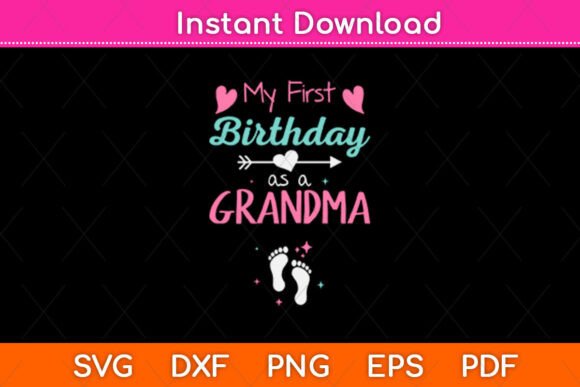
Reviewing the "First Birthday as Grandma" Design
As an embroidery designer who has spent countless hours digitizing and testing files for client projects, I approach every new machine embroidery design with a critical eye. It is not just about whether the image looks cute on a screen; it is about how that design translates into thread, how it behaves on fabric, and whether it holds up under the scrutiny of a paying customer. Recently, I evaluated the My First Birthday As a Grandma Pregnancy announcement graphic to determine its viability for real-world craft applications. While this specific asset is marketed primarily as an SVG for cutting machines like Cricut and Silhouette, its potential extends far beyond vinyl decals if approached with the right technical mindset.
First Impressions and Visual Personality
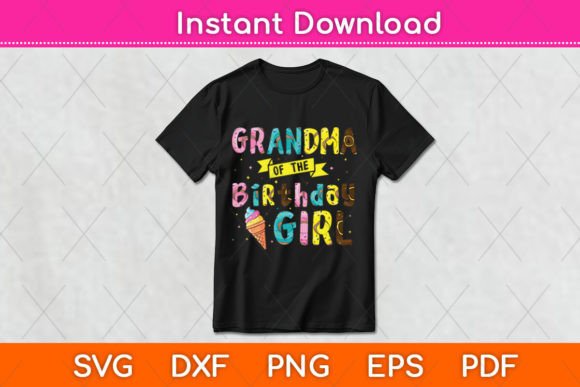
The immediate mood created by the My First Birthday As a Grandma Pregnancy layout is one of joyful anticipation. The typography typically associated with this theme tends to blend playful, rounded fonts with softer, celebratory elements. For an embroidery project, this visual personality suggests warmth and approachability. However, from a technical standpoint, the transition from a vector cut file to a stitched embroidery file requires careful consideration of line weight and spacing. The design’s charm lies in its simplicity, which is a double-edged sword in embroidery. Simple lines can look elegant, but they can also expose poor digitizing if the stitch paths are not optimized for clarity.
When I visualize this design on a physical product, I see it working best on items that allow for a moderate hoop size. The text-heavy nature of pregnancy announcements means that legibility is paramount. If the letters are too thin or the kerning too tight, the threads may merge, creating a blob rather than a readable message. This is where the distinction between a Graphics file and a purpose-built embroidery digitization becomes crucial. If you are converting this SVG yourself, you must pay close attention to the underlay and the type of stitch used for the text.
Real-World Application: The Custom Sweatshirt Scenario
To test the practical value of this design, imagine a common scenario for an Etsy seller or small shop owner. A customer orders a custom sweatshirt to announce their mother’s new role. They want something soft, wearable, and photogenic for social media. Using the My First Birthday As a Grandma Pregnancy concept here requires selecting the right thread colors and stabilizer. A light heather gray sweatshirt paired with a contrasting thread color, such as deep navy or soft blush, would highlight the design effectively.
In this context, the design serves as a personalized gift that carries emotional weight. The success of the finished product depends on the stitching clarity. If the design includes any decorative elements like hearts or baby feet, these should be rendered using a combination of satin stitch for borders and fill stitch for larger areas to ensure durability. For a craft business, consistency is key. If you plan to sell multiple units, you need to ensure that the design scales well without losing integrity. A design that looks perfect on a large tote might become illegible on a smaller item like a baby onesie.
Material Considerations and Stitch Density
One of the most critical aspects of evaluating any embroidery project is understanding how it interacts with fabric texture. The My First Birthday As a Grandma Pregnancy design, if adapted for embroidery, must be tested on various materials. On thick fabrics like fleece or terry cloth, a higher stitch density might be necessary to prevent the fabric from showing through the stitches. Conversely, on thinner materials like cotton tees or linen tote bag design blanks, too much density can cause puckering.
I strongly advise using a cut-away stabilizer for stretchy fabrics like sweatshirts to maintain the shape of the design after washing. For woven fabrics like aprons or pillow covers, a tear-away stabilizer might suffice, but testing is non-negotiable. If the design features fine details, consider using a running stitch for outlines to keep the profile low and flexible. This is particularly important for items that will be handled frequently, such as kitchen towels or baby blankets.
Navigating Limitations and Technical Challenges
While the sentiment of the My First Birthday As a Grandma Pregnancy theme is universal, its execution in embroidery has limitations. Small hoop sizes, such as 4x4 inches, may restrict the ability to include full phrases without reducing the font size to an unreadable level. In such cases, simplifying the design or focusing on key words like "Grandma" with a smaller subtitle might be more effective. Additionally, curved surfaces like caps present a challenge. Embroidering on a cap requires specialized digitizing to account for the curvature, and a complex text layout may distort if not properly adjusted.
Dark fabrics also pose a challenge for visibility. If you are stitching on black or navy, you must ensure high contrast. Sometimes, adding a white underlay or using a lighter thread color for the main text can help the design pop. Always test your design in black and white mockups to check for contrast issues before committing to expensive threads. This step is vital for maintaining professionalism and ensuring customer satisfaction.
Commercial Viability and Brand Consistency
For commercial embroidery professionals, the My First Birthday As a Grandma Pregnancy design can be a valuable addition to a seasonal catalog. Holiday seasons and family milestones drive significant sales in the handmade product market. However, brand consistency is essential. If your shop specializes in minimalist designs, a overly ornate version of this theme might not fit. Conversely, if your brand is known for whimsical, detailed work, this design could be enhanced with additional decorative elements.
It is also important to consider the licensing terms. Since the original product is described as an SVG for cutting machines, you must confirm whether you have the rights to use the design for commercial embroidery sales. Many digital assets have specific restrictions. Always check the license before selling custom apparel or design assets derived from third-party graphics. Protecting your business from legal issues is just as important as producing high-quality stitches.
Practical Designer Notes for Success
To ensure the best results when adapting this concept for embroidery, follow these practical steps:
- Test on Scrap Fabric: Always run a test stitch-out on the same type of fabric you intend to use for the final product. This helps identify tension issues and density problems.
- Check Thread Contrast: Use a color wheel to select threads that stand out against the fabric. High contrast improves readability and visual appeal.
- Review Stitch Density: Adjust the density based on the fabric weight. Lower density for delicate fabrics, higher for heavy materials.
- Confirm Hoop Size: Ensure the design fits within your available hoop sizes without excessive resizing that compromises quality.
- Inspect Small Details: Zoom in on the digitized file to check for tiny jumps or unnecessary trims that could cause thread breaks.
- Use Proper Stabilizer: Match the stabilizer to the fabric and design complexity. Wrong stabilizer choice is a leading cause of poor embroidery results.
- Verify Licensing: Confirm that the digital file allows for commercial use in embroidered goods before listing items for sale.
In conclusion, the My First Birthday As a Grandma Pregnancy theme offers a heartfelt narrative that resonates with many customers. While the source file may be intended for cutting machines, its potential in embroidery is significant if handled with technical precision. By focusing on stitch clarity, fabric compatibility, and professional presentation, designers and makers can transform this graphic into a cherished embroidered patch, sweatshirt embroidery, or baby embroidery piece. Whether you are creating a holiday embroidery gift or a small shop product, the key lies in respecting the medium and prioritizing quality in every stitch.