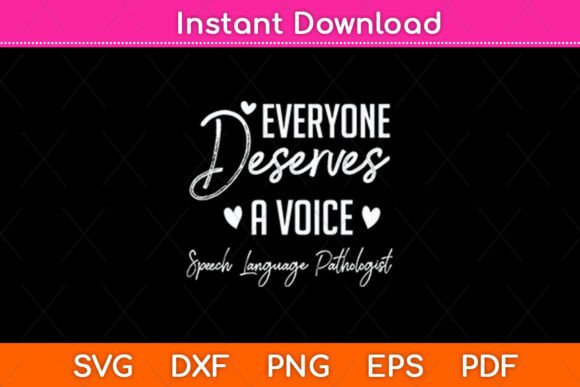
Speech Language Pathologist Everyone: A Designer’s Review
As an embroidery designer who spends half my life staring at digitized files and the other half watching needles punch through fabric, I have learned that not every graphic translates well into thread. When I first encountered the Speech Language Pathologist Everyone design, my initial reaction was one of cautious optimism. The message—“Everyone Deserves A Voice”—is powerful, resonant, and deeply meaningful to the SLP community. But in our line of work, sentiment alone does not make a successful embroidery project. We need clean lines, manageable stitch counts, and a layout that respects the limitations of the hoop.
This review comes from a place of practical application. I am not just looking at this as a pretty picture; I am evaluating it as a potential asset for a craft business, a small shop product, or a heartfelt personalized gift. Let’s break down how this design performs when it moves from the screen to the sewing field.
First Impressions: Mood and Visual Personality
The aesthetic of Speech Language Pathologist Everyone is clean and modern. It avoids the cluttered, overly decorative styles that often plague niche profession designs. Instead, it relies on strong typography and balanced spacing. For an embroidery designer, this is a relief. Complex shadows and gradients are nightmares to digitize and even worse to stitch out. This design’s simplicity suggests it was created with vector precision, which is a good sign for its potential as a machine embroidery design.
The mood is professional yet warm. It feels inclusive. This makes it versatile. It isn’t just for clinical settings; it fits perfectly in educational environments, private practices, or even as a statement piece on casual wear. When I visualize this on a tote bag design or a structured cap, the clarity of the message stands out. There is no visual noise competing with the text. For an Etsy seller or a boutique owner, this clarity is crucial. Customers scrolling through digital marketplaces need to understand the product instantly. This design delivers that immediate recognition.
Real-World Application: From Digital File to Finished Product
To truly test the viability of this asset, I imagined a specific scenario: creating a custom order for a local speech-language pathologist who wanted a professional yet approachable look for her clinic’s welcome gifts. She requested a high-quality sweatshirt embroidery piece that could withstand daily wear and frequent washing.
Using the Speech Language Pathologist Everyone concept, I considered how the design would interact with a cotton-poly blend fleece. The bold nature of the text suggests it would hold up well against the textured surface of the fabric. Unlike delicate script fonts that can get lost in the pile of a sweatshirt, the sturdy letterforms here would remain legible. If this were converted into a proper embroidery file with appropriate fill stitch density, it would create a tactile, premium feel that elevates the perceived value of the garment.
Beyond apparel, this design has strong potential for home goods. Imagine it stitched onto a heavy canvas apron for a therapy room, or perhaps as a central motif on a pillow cover in a waiting area. The versatility extends to smaller items too. A simplified version could work beautifully on a baby embroidery item, such as a bib or a onesie, celebrating the early stages of communication development. For holiday embroidery projects, pairing this message with subtle seasonal accents could create a unique gift for teachers and therapists during the appreciation season.
Technical Considerations for Embroiderers
While the source description notes this is an SVG for cutting machines like Cricut and Silhouette, those of us in the embroidery world know that conversion requires care. You cannot simply import an SVG into your embroidery software and expect perfection. Here is what you need to watch for when adapting Speech Language Pathologist Everyone for stitching:
- Stitch Density and Underlay: Text designs require robust underlay stitching to prevent the fabric from puckering. If you are digitizing this yourself, ensure you use a dense zigzag or edge walk underlay before applying the final satin stitch or fill.
- Hoop Size Constraints: Check the aspect ratio. If the phrase is long, it may require a 5x7 or 6x10 hoop to maintain legibility without shrinking the text too much. Cramping this design into a 4x4 hoop could render the smaller words unreadable.
- Fabric Texture: On textured fabrics like towels or fleece, you may need to increase the stitch count slightly to ensure coverage. On smooth quilting cotton, standard density should suffice.
- Stabilizer Selection: For stretchy fabrics like t-shirts, a cut-away stabilizer is non-negotiable. For woven fabrics like tote bags, a tear-away might work, but given the likely size of the text, a medium-weight cut-away will provide better long-term stability for the finished product.
It is also vital to consider thread colors. High contrast is key. A dark navy thread on a light gray sweatshirt will pop, while a pastel on white might vanish. Always run a test stitch on scrap fabric of the same type you intend to use. This step saves hours of frustration and prevents wasted materials.
Commercial Viability and Brand Consistency
For commercial embroidery professionals and digital product sellers, the licensing and usability of a design are paramount. Before selling any handmade product featuring this design, you must confirm the license terms. Since the original file is described as an instant download for cutting machines, you need to verify if the creator allows for commercial use of derived embroidery files. Never assume. Protect your craft business by ensuring you have the right to sell the embroidered patch, shirt, or tote.
From a branding perspective, Speech Language Pathologist Everyone aligns well with businesses that focus on advocacy, education, and healthcare. It builds trust. When a customer sees a cleanly stitched, professionally presented design, they perceive the maker as skilled and attentive. This design supports that perception. It is not flashy or gimmicky; it is dignified. This dignity translates to higher customer engagement and potentially higher price points for your custom apparel or printable mockup portfolios.
Where to Use Caution
No design is universal. There are scenarios where Speech Language Pathologist Everyone might struggle. Avoid using it on very thin, slippery fabrics like silk or rayon unless you are an advanced digitizer with experience in stabilizing delicate materials. The tension required for clear text can easily distort these fabrics.
Additionally, be mindful of curved surfaces like caps. If the design is too wide, it will wrap around the sides of the hat, distorting the message. In such cases, consider breaking the design into two lines or abbreviating if permissible, though maintaining the integrity of the phrase “Everyone Deserves A Voice” is likely important to the end user. Always check the hoop size compatibility with your specific machine model before committing to a large batch production.
Final Verdict
The Speech Language Pathologist Everyone design holds significant promise for the thoughtful embroiderer. It bridges the gap between meaningful messaging and clean aesthetics. While it originates as a graphic for cutting machines, its structure lends itself well to adaptation for needle and thread. By paying attention to stitch density, fabric choice, and licensing, you can transform this digital asset into a stunning handmade product that resonates with clients and customers alike. Whether you are creating a single personalized gift or stocking your small shop product line, this design offers a solid foundation for professional, impactful embroidery work.